
What to Ask Your Matcha Supplier: A Buyer's Checklist
Wakokoro TeaShare
Choosing a matcha supplier is one of the most consequential decisions a cafe owner or wholesale buyer can make. The right partner can elevate your menu, delight your customers, and give you confidence that every tin you open will taste the way you expect. The wrong one can leave you with inconsistent color, muddy flavor, and a reputation quietly eroded one lackluster latte at a time. Yet many buyers approach the conversation without knowing what to ask — and in a category as nuanced as matcha (finely stone-ground green tea), the questions you ask reveal as much as the answers you receive.
This guide walks you through the essential questions to bring to any matcha supplier. Think of it as a checklist you can keep beside you during that first email exchange or tasting call. A good supplier will welcome these questions; a great one will have answered most of them before you even ask.
Start With Origin: Where Does the Matcha Actually Come From?
Origin is the foundation of quality, and it is the first thing worth clarifying. Japan produces matcha across several celebrated regions, each with its own character shaped by climate, soil, and generations of local expertise.
Ask your supplier to name the specific prefecture and, ideally, the growing area. Regions such as Uji in Kyoto, Nishio in Aichi, and parts of Kagoshima and Fukuoka are known for cultivating tencha (the shade-grown leaf that becomes matcha) with distinct profiles. A supplier who can speak clearly about origin — rather than offering a vague "premium Japanese matcha" — is showing you they know their supply chain.
Questions worth asking about origin
- Which prefecture and growing region is this matcha from?
- Is it single-origin, or blended from multiple regions?
- Do you have a direct relationship with the farms or tea masters?
- What cultivar or cultivars are used?
Neither single-origin nor blended is inherently better. Blends are often crafted for consistency and balance, while single-origin lots celebrate the character of one place. What matters is that your supplier can explain their choice and what it means for the cup.
Ask About Harvest Date and Freshness
Matcha is far more perishable than many buyers realize. Because it is a fine powder with an enormous surface area, it is especially sensitive to oxygen, light, heat, and humidity. Over time, its vibrant green fades toward yellow-brown and its aroma flattens. This is why harvest date matters enormously.
The finest matcha typically comes from the first harvest, known as ichibancha, picked in spring when the young leaves are at their most tender and flavorful. Later harvests generally produce more robust, sometimes more astringent matcha often suited to culinary use.
What to ask about freshness
- When was this matcha harvested, and when was it stone-ground?
- Is this from the first flush (ichibancha) or a later harvest?
- How is the matcha stored before it reaches me?
- What is the recommended shelf life, and how should I store it once opened?
Matcha is often ground shortly before shipping to preserve freshness, since the powder degrades faster than the whole tencha leaf. A supplier who grinds to order, or in small frequent batches, is signaling a genuine commitment to quality. Ask how they protect the product in transit and storage — nitrogen-flushed packaging and refrigerated storage are good signs.
Request a Test Batch Before Committing
No amount of description replaces tasting the matcha yourself. Any reputable supplier should be willing to provide samples or a small test batch so you can evaluate the product in your own space, prepared by your own team, with your own water and equipment.
When you receive a sample, evaluate it methodically rather than relying on a single sip. Prepare it as usucha (thin tea, whisked with water) and, if you serve lattes, taste it with milk as well — some matcha that shines on its own can be overwhelmed by dairy, while others are blended specifically to cut through it.
What to evaluate in a test batch
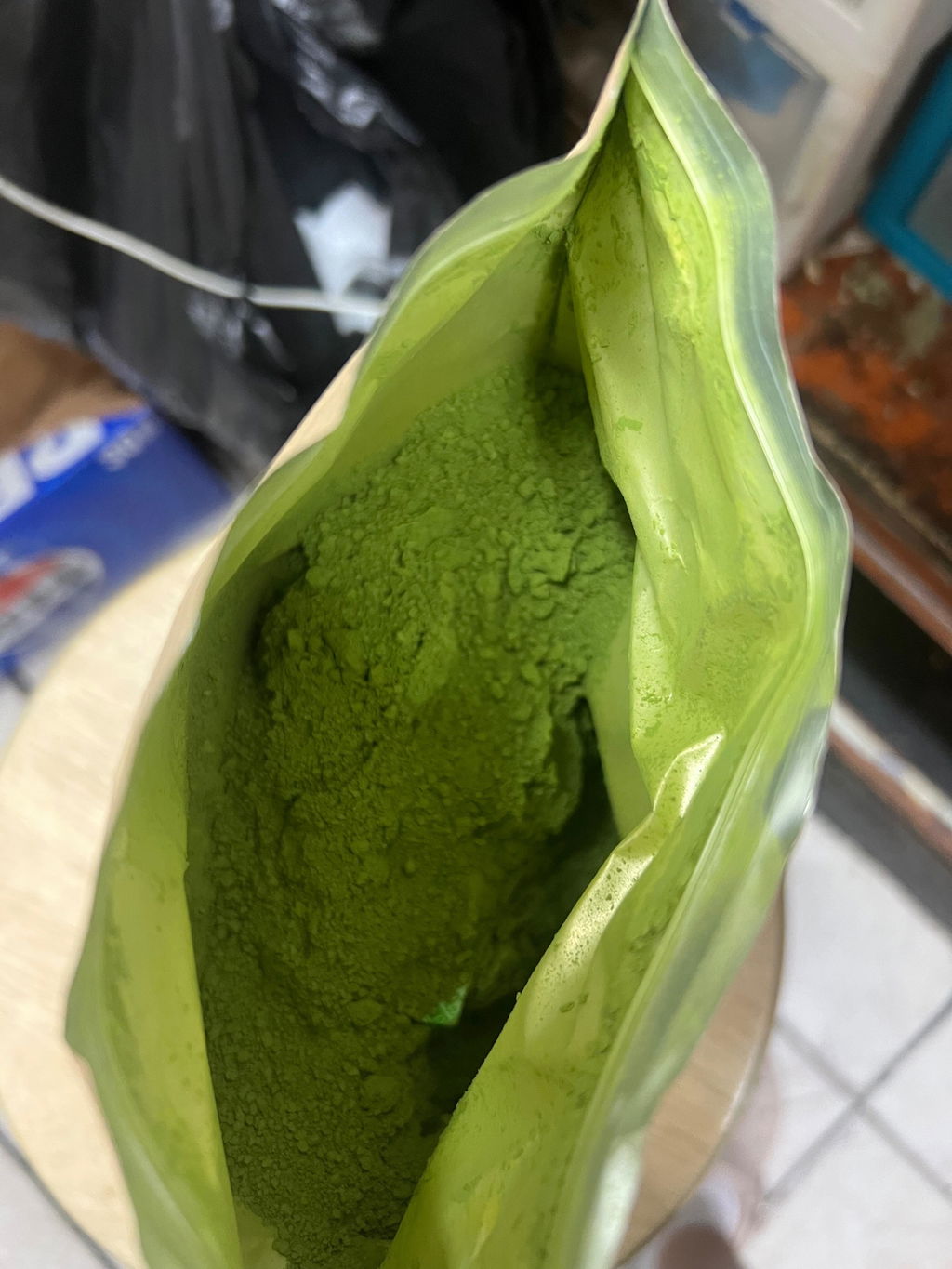
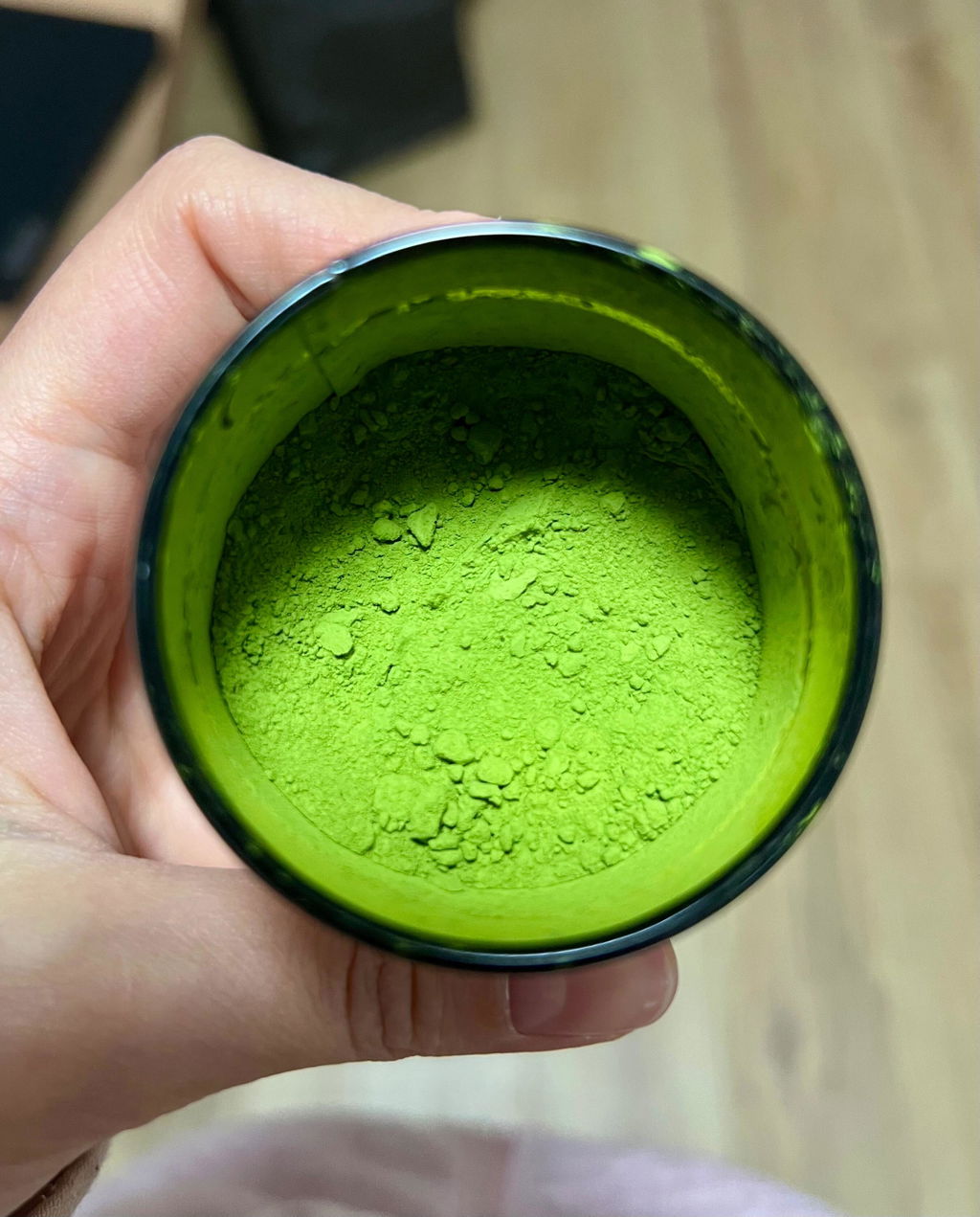
- Color: Look for a vivid, almost luminous green. Dull or yellowish tones often indicate lower grade or aging.
- Aroma: Fresh matcha carries a sweet, grassy, sometimes marine fragrance.
- Texture: Rub a little between your fingers — high-quality matcha feels silky, like talc, not gritty.
- Taste: Notice the balance of umami (savory depth), natural sweetness, and astringency. Good matcha tends to finish smooth rather than harshly bitter.
- Performance with milk: For latte-focused cafes, confirm the flavor holds up when combined with dairy or plant-based milks.
Ask whether the sample you are tasting comes from the same lot you would be buying. Tasting an aspirational grade and receiving something lesser is a frustration you want to rule out early.
Probe for Consistency Across Batches
For a cafe, consistency is often as important as peak quality. Your customers return because their matcha latte tastes the same on a Tuesday in March as it did in November. Because tea is an agricultural product, natural variation between harvests is inevitable — the mark of a strong supplier is how they manage it.
Consistency questions to raise
- How do you maintain flavor and color consistency from batch to batch?
- If a harvest varies, how will you communicate changes to me?
- Can you reserve or allocate stock so I am not left without my chosen grade?
- Do you offer the same product year-round, or does availability shift seasonally?
Skilled tea blenders work precisely to smooth out seasonal variation so that a signature blend remains recognizable year after year. If your supplier offers single-origin lots, ask honestly how much variation to expect and plan your menu accordingly.
Clarify Minimum Order Quantities and Terms
Once you are satisfied with the tea itself, the commercial details determine whether the partnership is practical for your business. Minimum order quantities (MOQs) vary widely, and it is worth understanding them before you fall in love with a product you cannot realistically stock.
Practical logistics to confirm
- What is the minimum order quantity, and does it decrease as volume grows?
- What packaging sizes are available — retail tins, bulk bags, or both?
- What are the lead times, and how reliable are they during peak seasons?
- What are the payment terms, shipping costs, and import considerations?
- Do you offer wholesale pricing tiers or support for growing accounts?
A thoughtful supplier will help you match order size to your actual turnover, so your matcha is always fresh rather than sitting in storage past its prime. For newer cafes, a lower MOQ or a starter allocation can be invaluable while you gauge demand.
Look Beyond the Product to the Relationship
Finally, pay attention to how a supplier communicates. Do they answer your questions clearly and patiently? Do they offer brewing guidance, staff training resources, or support tailored to your equipment? Matcha is a craft product, and the best sourcing relationships feel like partnerships rather than transactions.
Certifications and testing can also offer peace of mind. It is reasonable to ask about food safety practices and whether products undergo testing for quality and purity, particularly if you serve a large or health-conscious clientele. Matcha is traditionally associated with a calm, focused energy — an effect many people attribute to the combination of caffeine and the amino acid L-theanine — and while we avoid making specific health claims, sourcing carefully honors both the tradition and your customers' trust.
Bringing It All Together
The questions in this checklist — origin, harvest date, test batches, consistency, and order terms — are not about catching a supplier out. They are about building a relationship grounded in transparency, so that every bowl and every latte you serve reflects the care that went into growing and grinding the leaf. When both sides understand what quality means and how to sustain it, everyone benefits: the farmer, the buyer, and the customer holding the cup.
At Wakokoro Tea, we believe good questions deserve honest answers. If you are weighing your options and want to taste the difference authentic, carefully sourced Japanese matcha can make, our team would be glad to arrange samples and talk through what suits your menu, your volume, and your vision. Reach out whenever you are ready — we are always happy to share what we know.