
Understanding the Umami in Matcha
Wakokoro TeaShare
Take your first sip of a well-made bowl of matcha and something unexpected happens. Before any bitterness arrives, before the grassy brightness fades, there is a wave of savory, almost brothy richness that coats the tongue and lingers. This quality is called umami (the fifth basic taste, often described as savoriness), and it is one of the clearest markers of truly fine Japanese green tea. Understanding where umami comes from — and why some matcha overflows with it while other matcha tastes thin or sharp — is the key to appreciating this remarkable powder and sourcing it with confidence.
In this guide, we'll trace umami from the chemistry of the tea leaf to the shaded fields of Japan, and explore the patient craftsmanship that transforms an ordinary plant into one of the world's most celebrated beverages.
What Umami Actually Is
Umami was first identified by the Japanese chemist Kikunae Ikeda in 1908, when he isolated glutamate from kombu (edible kelp) and recognized it as a distinct taste separate from sweet, salty, sour, and bitter. We now know that umami is produced primarily by certain amino acids, especially glutamate, and it is the taste we associate with foods like aged cheese, ripe tomatoes, soy sauce, and well-simmered broths.
In matcha, umami comes largely from a group of amino acids present in the tea leaf. The most important of these is L-theanine, along with glutamic acid and others. When these amino acids are abundant, the tea tastes round, sweet, and savory. When they are scarce — or when they have been converted into other compounds — the tea leans toward astringency and bitterness instead.
This is why umami is not simply a pleasant bonus. It is a direct reflection of the leaf's internal chemistry, which in turn reflects how the tea was grown, harvested, and processed.
L-Theanine: The Heart of Matcha's Character
L-theanine is an amino acid found almost exclusively in the tea plant (Camellia sinensis) and a few related species. It is responsible for much of the sweetness and savory depth in high-grade Japanese green tea, and it is traditionally associated with the smooth, mellow quality that distinguishes premium matcha from coarser grades.
Beyond flavor, L-theanine has attracted considerable interest for its possible effects on the mind and body. Many people find that matcha provides a calm, focused kind of alertness rather than the jittery energy sometimes linked to coffee, and some research suggests that L-theanine may play a role in this experience by influencing how the body responds to caffeine. We want to be careful here: these are areas of ongoing study rather than settled fact. What is certain is that L-theanine is central to the taste of matcha, and that generations of Japanese tea farmers have refined their methods specifically to preserve and concentrate it.
How the Tea Plant Makes and Uses L-Theanine
Here lies the fascinating part. The tea plant produces L-theanine in its roots, then transports it up into the growing leaves. When those leaves are exposed to sunlight, a natural process begins: sunlight drives photosynthesis, and the plant gradually converts L-theanine into catechins (a group of compounds responsible for astringency and much of green tea's characteristic bite).
In other words, sunlight tends to trade sweetness for sharpness. The more light a leaf receives, the more its precious amino acids are transformed into bitter and astringent compounds. This single biological fact is the foundation of one of the most ingenious techniques in Japanese agriculture.
Shading Cultivation: Growing Umami on Purpose
If sunlight reduces L-theanine, then limiting sunlight should preserve it — and that is exactly what Japanese farmers do. The practice is called ooishita saibai (shade cultivation), and it is the defining step that separates matcha and gyokuro (a premium shaded leaf tea) from everyday green teas.
In the weeks leading up to harvest, farmers cover their tea bushes to block most of the incoming light. Deprived of full sun, the plants respond in several important ways:
- L-theanine accumulates in the leaves rather than being converted into catechins, deepening umami and sweetness.
- Chlorophyll production increases as the plant works harder to capture the limited light, giving shaded leaves their vivid, almost electric green color.
- Leaves grow thinner and more tender, developing a softer texture and a gentler flavor profile.
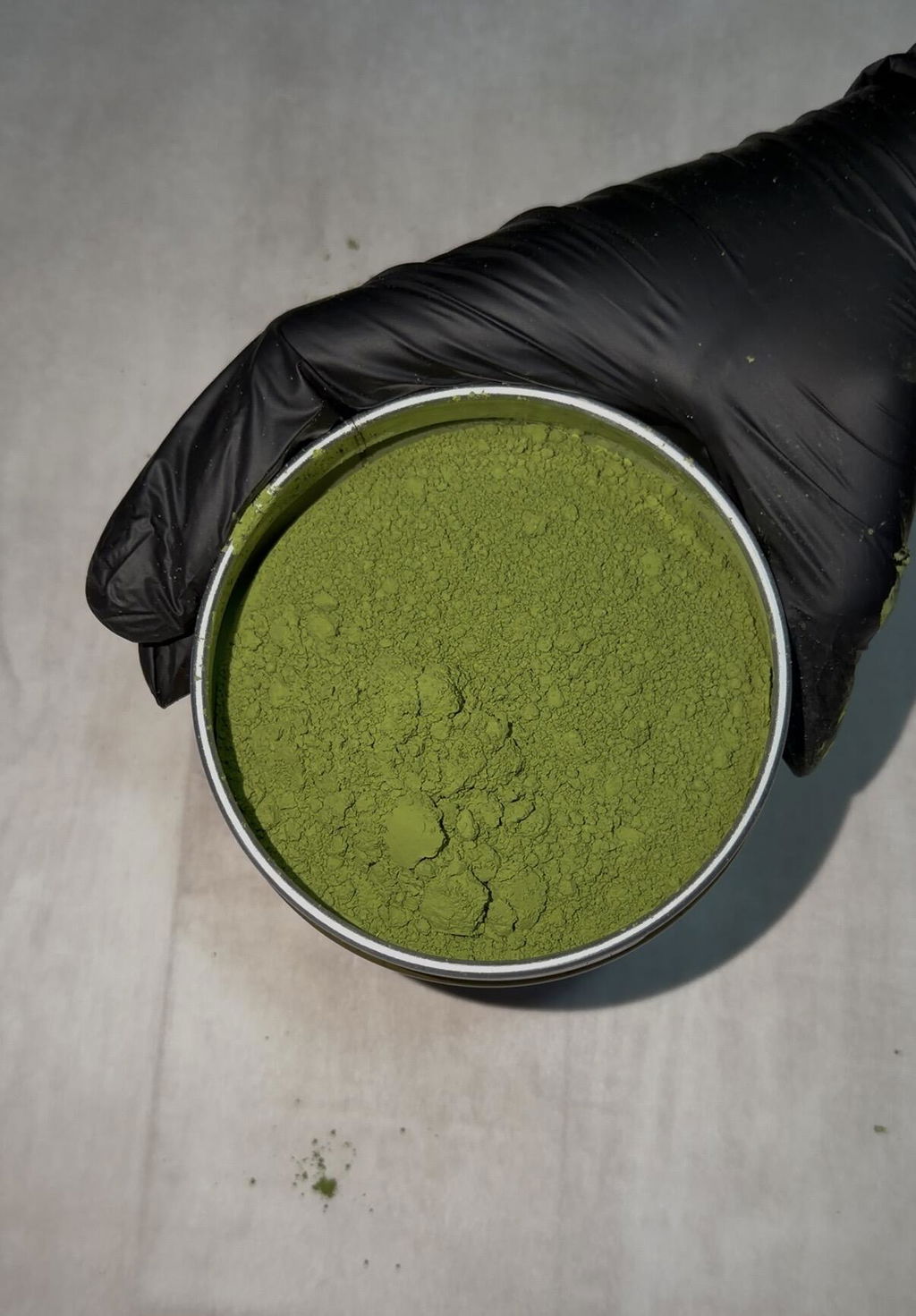
The vibrant green of fine matcha is therefore not a coincidence or a sign of added coloring — it is visual evidence of proper shading. A dull, yellowish, or khaki tone often signals that the leaves received more sun than ideal, or were of lower quality to begin with.
The Craft of Shading
Shading is far more nuanced than simply throwing a cloth over the plants. The timing, duration, and degree of shade all shape the final flavor, and skilled farmers adjust each element with great care.
Traditionally, the finest fields are shaded using a technique called honzu, in which layers of reeds and straw are built over a framework above the bushes. This labor-intensive method, still used for top-tier teas, creates a gentle, diffused darkness that farmers can fine-tune day by day. More commonly today, black synthetic netting is used, which is lighter, more affordable, and easier to manage across larger fields.
The shading period typically lasts around three to four weeks before harvest. Longer shading generally yields more umami and a deeper color, but it also demands more skill and carries more risk, since the plants are under stress. The grower's judgment during this window has an enormous influence on the quality of the finished matcha.
From Shaded Leaf to Umami-Rich Powder
Shading sets the stage, but several further steps are needed to protect and express the umami that the farmer has worked to build.
Careful Harvesting
The best matcha comes from the first flush of spring, known as ichibancha (first harvest). These early leaves, grown through the cool spring months and then shaded, contain the highest concentrations of amino acids. Later harvests tend to be more astringent and are generally used for lower grades.
Steaming and Drying
Soon after picking, the leaves are steamed to halt oxidation. This quick application of heat locks in the fresh green color and preserves the delicate amino acids, preventing the leaf from browning the way oxidized black tea does. The leaves are then dried and sorted.
Becoming Tencha, Then Matcha
For matcha, the stems and veins are removed, leaving only the tender leaf flesh. This refined material is called tencha. Finally, the tencha is ground — traditionally between slow-turning granite stone mills — into an impossibly fine powder. Because you consume the whole leaf rather than straining it away, matcha delivers its umami, its color, and its nutrients in full, which is part of why it is so prized.
Tasting and Recognizing Umami
Once you know what to look for, umami becomes easy to notice. When you sip a high-quality matcha, pay attention to the following:
- The arrival: A savory, broth-like richness that appears early, often before any bitterness.
- The sweetness: A natural, lingering sweetness with no sugar added, sometimes compared to fresh greens or sweet corn.
- The finish: A smooth, clean aftertaste that lasts well after swallowing, rather than a sharp or drying sensation.
Astringency and a little bitterness are not flaws in themselves — they add structure and balance. But in a fine matcha, they are held in harmony by that cushion of umami. For culinary or latte grades, a bolder, more robust profile is often desirable so the flavor carries through milk, while ceremonial grades highlight umami and subtlety. Neither is "better" in absolute terms; what matters is matching the tea to its purpose.
Why Umami Matters for Buyers and Cafe Owners
For those sourcing matcha professionally, umami is a practical quality marker as much as a sensory pleasure. A matcha rich in umami signals careful shading, an early harvest, and attentive processing — all hallmarks of genuine craftsmanship. It tells you the product was made with intention rather than cut corners, and it gives your customers an experience they will remember and return for.
If you'd like help selecting matcha with the depth, color, and umami that reflect true Japanese craftsmanship, the team at Wakokoro Tea would be glad to guide you. We work closely with dedicated growers and are always happy to share samples, answer questions, and help you find the grade that fits your cafe, your menu, or simply your own quiet bowl at home.