
Matcha Particle Size: Why Grind Matters
Wakokoro TeaShare
When most people evaluate matcha, they focus on colour, aroma, and price. Yet one of the most decisive factors in how a bowl of matcha actually tastes and feels sits invisible to the naked eye: particle size. The fineness of the powder — measured in microns, thousandths of a millimetre — shapes everything from the smoothness on your tongue to the stability of the foam and how long the tea stays suspended before settling. Understanding grind is one of the surest ways to become a more confident buyer, whether you drink matcha at home or serve it across a busy café counter.
In this guide, we'll look at why particle size matters, how traditional stone mills differ from modern ball mills, what micron ranges to expect from different grades, and how all of this translates into the cup.
What Particle Size Actually Means in Matcha
Matcha is unusual among teas because you consume the entire leaf rather than steeping and discarding it. That single fact makes grind enormously important. When you drink sencha (a steeped green tea), the water extracts flavour and the leaf is thrown away. With matcha, the leaf is the drink. The size of each particle therefore determines how the powder behaves in water and how it feels in your mouth.
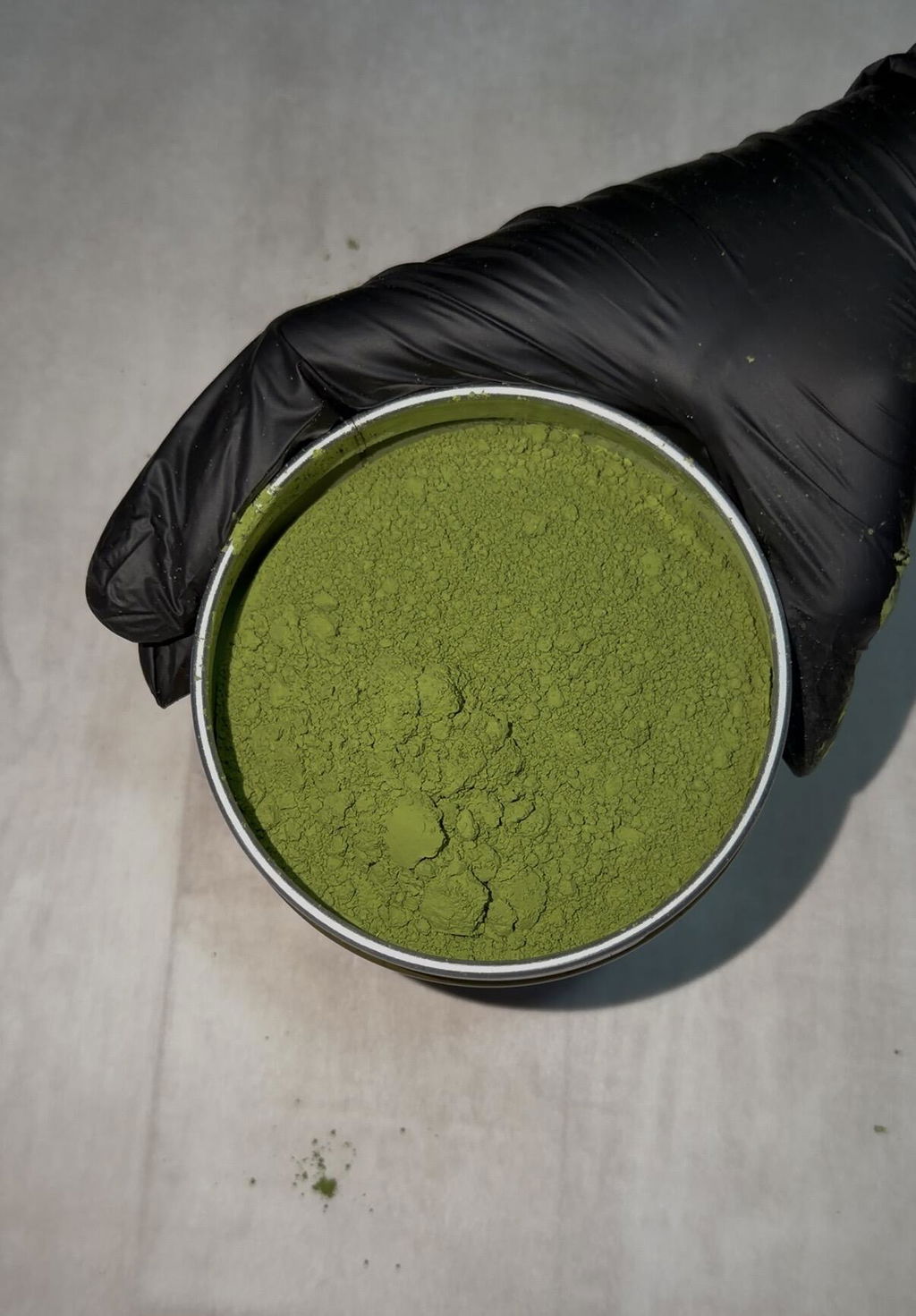
High-quality ceremonial matcha is typically ground to an extraordinarily fine powder — often in the range of 5 to 15 microns. To put that in perspective, a grain of table salt is roughly 100 microns across, and human hair is around 70 microns wide. Genuine matcha particles are finer than both. This near-impossible fineness is what gives premium matcha its silky, almost weightless texture.
Why Fineness Affects Suspension
One hallmark of well-made matcha is suspension — the way the powder stays dispersed throughout the water rather than sinking quickly to the bottom of the bowl. Finer particles have more surface area relative to their weight, so they resist gravity longer and remain evenly distributed. A coarser powder settles faster, leaving a gritty residue and an uneven flavour from first sip to last.
Suspension matters practically, too. In a café setting, matcha that holds together allows a barista a little more time to work before the drink separates, and it produces a more consistent experience for every customer.
Stone Mills vs Ball Mills: Two Very Different Philosophies
The equipment used to grind matcha has a profound influence on the final powder. There are two dominant methods: the traditional granite stone mill (ishiusu) and the modern industrial ball mill. Each has its place, and understanding the trade-offs helps you match a matcha to its intended purpose.
The Traditional Stone Mill (Ishiusu)
For centuries, the finest matcha has been ground using ishiusu — hand-carved granite mills consisting of two circular stones. The dried, de-veined leaf (called tencha) is fed slowly into the centre, and as the top stone rotates, the leaf is gently crushed and pushed outward through fine grooves cut into the granite surface.
The defining characteristic of stone milling is its slowness. A single mill produces only about 30 to 40 grams of matcha per hour — a strikingly small yield. But this gentleness is precisely the point. Because the process generates very little heat and friction, it preserves the delicate aromatic compounds and the vivid green colour that heat can degrade. The result is a supremely fine, fluffy powder with the smooth mouthfeel prized in ceremonial-grade matcha.
This painstaking craft is a living link to Japan's agricultural and cultural heritage. The stones themselves are dressed and re-grooved by skilled artisans, and the rhythm of the mill has changed little in generations.
The Modern Ball Mill
Ball mills take an entirely different approach. Leaf is placed in a rotating drum along with ceramic beads or balls, which tumble and crush the material as the drum turns. This method is far faster and more scalable, producing large volumes in a fraction of the time.
Ball milling has genuine advantages. It is cost-effective and can achieve a consistent, fine particle size — often suitable for culinary applications such as lattes, baking, and blending. However, the increased speed and friction can generate more heat, which some producers manage carefully and others do not. When poorly controlled, this heat may dull the colour and flatten the aroma. For high-volume culinary matcha, though, a well-run ball mill can deliver excellent, dependable results at a reasonable price.
Understanding Micron Ranges by Grade
Particle size and intended use tend to go hand in hand. While there is no single universal standard, the following ranges offer a helpful frame of reference:
- Ceremonial-grade matcha (roughly 5–15 microns): The finest powders, usually stone-milled, intended to be whisked with hot water and enjoyed on their own. Prized for silky texture, delicate aroma, and vibrant colour.
- Premium daily-drinking matcha (roughly 10–20 microns): Still very fine and pleasant to drink straight, but often more approachable in price and well suited to everyday preparation.
- Culinary-grade matcha (roughly 20–40 microns and above): A slightly coarser grind designed to hold its own against milk, sugar, and other ingredients in lattes, desserts, and cooking.
It's worth remembering that a finer grind is not automatically "better" in every context. A robust culinary matcha destined for a sweetened iced latte does not need — and would not benefit financially from — the extreme fineness of a top ceremonial powder. Matching grind to purpose is the mark of an informed buyer.
How Grind Shapes Texture, Foam, and Flavour
Texture on the Palate
Texture is where particle size announces itself most immediately. A superfine, stone-milled matcha feels smooth and creamy, almost like liquid velvet, with no perceptible grittiness. As particle size increases, the powder begins to feel grainier and can leave a slight chalkiness. Many people find that mouthfeel is one of the clearest signals of a matcha's overall quality.
Foam and the Whisking Experience
The delicate, frothy layer of tiny bubbles on top of a well-whisked bowl — created with a bamboo whisk called a chasen — depends heavily on fineness. Finer particles allow a denser, more stable, and longer-lasting foam with a smooth, creamy surface. Coarser powders tend to produce larger, shorter-lived bubbles that dissipate quickly. For traditional usucha (thin tea) preparation, that fine, persistent crema is one of the great pleasures of the bowl.
Flavour Release and Balance
Because finer particles present more surface area to the water, they can release their flavour compounds more readily and evenly. This tends to produce a rounder, more integrated taste, with the natural sweetness and savoury depth (umami) that fine Japanese matcha is celebrated for. Compounds such as L-theanine, an amino acid traditionally associated with green tea's smooth character, are part of what gives quality matcha its distinctive balance — though flavour ultimately depends on cultivation and processing as much as on grind.
What This Means for Your Buying Decisions
For home drinkers, the takeaway is simple: if you plan to whisk and sip matcha on its own, seek out a finely stone-milled ceremonial or premium grade for the smoothest, most rewarding experience. If matcha is mainly an ingredient in your kitchen, a well-made culinary grade offers excellent value.
For café owners and wholesale buyers, particle size is a lever you can pull to control consistency, cost, and customer experience. Consider stocking more than one grade — a refined powder for those who order traditional matcha, and a dependable culinary powder for high-volume milk-based drinks. Ask your supplier how their matcha is milled and, where possible, what micron range you can expect. A trustworthy source will answer these questions readily.
At Wakokoro Tea, we take the craft of milling seriously because we believe it is inseparable from the character of the tea itself. If you'd like guidance on choosing the right grind for your menu, your ceremony, or your morning ritual, our team is always glad to share what we know and help you find a matcha that suits exactly how you intend to enjoy it.