
Matcha Latte Ratios: Finding the Right Dose per Cup
Wakokoro TeaShare
Few drinks have travelled as far, as fast, as the matcha latte. What began as a quiet ritual in the tea rooms of Japan now appears on menus from Melbourne to Montreal. Yet for all its popularity, the matcha latte remains one of the trickiest beverages to standardize behind a busy counter. Too little powder and the drink tastes milky and vague; too much and it turns bitter and chalky. The difference between a forgettable latte and one that earns loyal regulars often comes down to a few tenths of a gram and a careful eye on the milk.
This guide is written for cafe owners and baristas who want to move beyond guesswork. We will look at the grams per serving, milk volume, sweetness balance, and—perhaps most importantly—how your chosen grade of matcha changes the math entirely.
Why Ratio Matters More in Matcha Than in Coffee
With espresso, the dose is contained and consistent: a shot is a shot. Matcha is different because the powder is suspended throughout the entire drink rather than extracted and left behind. Every particle of the matcha (finely stone-ground green tea) stays in the cup, which means the flavor is directly proportional to how much you use. There is nowhere for a mistake to hide.
This is why a repeatable ratio is the backbone of a good matcha program. Once you find the balance that suits your beans—your milk, your audience, your grade of tea—you can train every team member to reproduce it. Consistency is what turns a curious first-time customer into a weekly one.
The Baseline Dose: How Many Grams per Cup
As a starting point, most cafes land on 2 grams of matcha per standard latte. This is roughly one slightly heaped chashaku (bamboo tea scoop) or just under a level teaspoon. From there, the dose scales with the size and intensity you want:
- 1.5 g — a gentle, approachable latte for smaller 6–8 oz servings or milder palates
- 2 g — the reliable standard for an 8–10 oz latte with clear matcha character
- 2.5–3 g — a bolder, more pronounced cup for 12 oz servings or customers who want the tea to lead
We strongly recommend weighing matcha on a small scale rather than relying on scoops alone. Matcha compacts and clumps differently depending on freshness and humidity, so a "teaspoon" can vary by half a gram or more. In a cafe setting, that variance is the enemy of consistency. A simple 0.1 g jeweller's scale pays for itself quickly in reduced waste and happier customers.
Milk Volume and the Art of Dilution
Once your dose is set, milk volume becomes the main lever for strength. A 2 g dose feels completely different in 6 ounces of milk than it does in 14. Here the goal is to find a total liquid volume where the matcha is present and expressive without being diluted into the background.
A practical framework many cafes use is roughly 1 gram of matcha for every 90–120 ml (3–4 oz) of milk. Within that range:
- Lean toward 90 ml per gram for a concentrated, matcha-forward latte
- Lean toward 120 ml per gram for a softer, creamier, more milk-dominant drink
Preparing the Base First
Whatever volume you choose, always whisk or shake your matcha into a small amount of warm (not boiling) water first—around 30–60 ml at roughly 70–80°C. This creates a smooth, lump-free base before the milk is added. Pouring hot milk directly onto dry powder almost guarantees clumping and an uneven cup. A quick emulsification with a chasen (bamboo whisk), a milk frother, or an electric whisk makes all the difference in texture.
Hot Versus Iced
Iced lattes deserve special attention. Ice melts and dilutes the drink as the customer sips, so iced versions benefit from a slightly higher dose—adding 0.5 g over your hot recipe keeps the flavor from fading. Many cafes also prepare a concentrated matcha "shot" with cold water, then pour it over milk and ice, which preserves the vibrant color and prevents the powder from settling.
Balancing Sweetness Without Masking the Tea
Sweetness is where many matcha lattes go astray. It is tempting to over-sweeten to smooth out any bitterness, but heavy syrup buries the very flavors that make good matcha worth drinking. The aim is to support the tea, not disguise it.
A few guiding principles:
- Start low. Begin with around 5–10 ml of simple syrup (or an equivalent light sweetener) per latte and adjust from there.
- Match sweetness to grade. A higher-grade matcha with natural umami (a savory, brothy depth) often needs very little sweetener, while a more astringent culinary grade may benefit from a touch more.
- Consider the milk. Oat milk and some plant-based options carry their own natural sweetness, which can reduce or even eliminate the need for added syrup. Dairy tends to be more neutral.
- Let customers lead. Offering sweetness as an option rather than a default lets purists and sweet-tooths alike enjoy the drink their way.
How Matcha Grade Changes Everything
Perhaps the most overlooked factor in latte ratios is the grade of matcha itself. Dose and milk volume are not universal numbers—they interact closely with the quality and character of the powder you pour.
Ceremonial-Style Matcha
Higher grades, made from young first-harvest leaves and stone-ground to an exceptionally fine texture, carry natural sweetness, vivid green color, and a smooth, rounded flavor. In a latte, these shine even at a modest 2 g dose and need very little sweetener. Some cafes reserve these for a premium "straight" or lightly milked latte where the quality can be tasted. The trade-off is cost, so many venues use them selectively rather than as an everyday pour.
Latte or Culinary Grade Matcha
Blends crafted specifically for milk-based drinks are designed to hold their own against dairy. They tend to have a stronger, more robust profile that cuts through milk rather than disappearing into it. With these grades, you may find you need slightly more powder—2.5 g or more—to achieve a clear matcha presence, and a little sweetness helps round out any edge. For high-volume cafes, a well-made latte-grade matcha offers the best balance of flavor, color, and cost per cup.
Reading the Color in the Cup
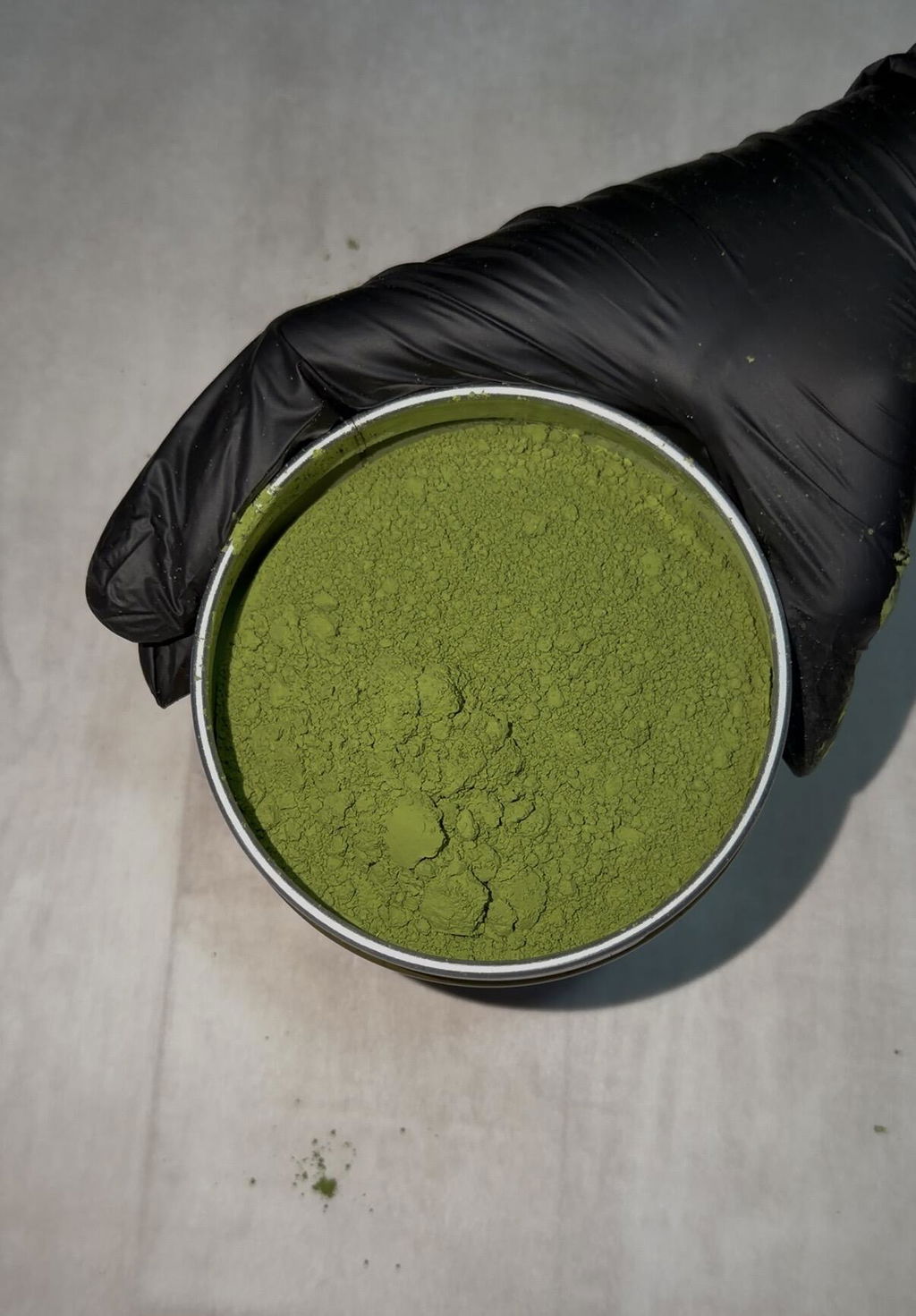
Grade also shows up visually. A quality matcha produces a bright, jade-green latte, while lower-quality or older powder tends toward a dull, yellowish-brown. Since customers often judge a matcha latte with their eyes before their palate, color consistency is part of your product. If your lattes look pale or muddy, the issue may be the grade or freshness of the powder rather than your ratio.
Building Your House Recipe
Rather than chasing a single "perfect" number, think of your matcha latte as a recipe you dial in deliberately. A reliable process looks like this:
- Choose your grade based on price point and the style of drink you want to serve.
- Set a baseline dose (start at 2 g) and weigh it consistently.
- Fix your total milk volume for each cup size and keep it the same every time.
- Dial in sweetness last, tasting as you go, and consider offering it as an adjustable option.
- Document the final recipe and train every barista to follow it to the gram.
Once these variables are locked in, your matcha latte stops being a gamble and becomes a signature—something regulars can count on and newcomers remember.
If you are refining your cafe's matcha program and want powder that performs beautifully in milk, pour after pour, the team at Wakokoro Tea is here to help you source the right grade for your menu and your margins. Reach out to us for samples, wholesale guidance, and honest advice on matching matcha to the cup you want to serve—we would be glad to help you build a latte your customers come back for.