
How Freshness Affects Matcha Quality: A Buyer's Guide to Peak Flavour
Wakokoro TeaShare
Few teas are as sensitive to time as matcha. Because it is a stone-ground powder rather than an intact leaf, matcha exposes an enormous surface area to air, light, heat, and moisture — the very elements that gradually dull its brilliant colour and layered flavour. A tin of matcha that tastes vibrant, sweet, and full of umami (the savoury "fifth taste" prized in Japanese cuisine) in its first weeks can slowly fade into something flat and papery if handled carelessly. Understanding freshness, then, is one of the most important skills a matcha buyer can develop, whether you are preparing a single bowl at home or serving hundreds of lattes each week.
In this guide, we will walk through why matcha degrades, how the oxidation timeline unfolds, why packaging matters far more than many people realise, and — most usefully — how to assess freshness with confidence before you commit to a purchase.
Why Matcha Is So Vulnerable to Ageing
To appreciate freshness, it helps to understand what makes matcha structurally different from other green teas. Loose-leaf sencha (Japan's most common everyday green tea) keeps its leaves largely whole, meaning the interior of each leaf is protected until you steep it. Matcha, by contrast, is made from shade-grown tencha (the leaf grown specifically for matcha) that has been carefully dried and then milled into an ultra-fine powder — often to particles just microns across.
This grinding is what gives matcha its silky texture and full-bodied character, but it also strips away the leaf's natural protection. Every particle is now exposed, and the compounds responsible for matcha's colour, aroma, and taste begin reacting with oxygen almost immediately. This is why matcha, more than nearly any other tea, rewards those who buy thoughtfully and store it well.
The compounds that make matcha special — and fragile
Matcha's vivid green comes largely from chlorophyll, encouraged by the weeks of shading before harvest. Its sweetness and savoury depth are traditionally associated with amino acids such as L-theanine, while its aroma comes from a delicate bouquet of volatile compounds. All of these are susceptible to change over time. As matcha ages, chlorophyll breaks down and the colour shifts from a bright, almost electric green toward a duller yellow-green or khaki. The fresh, grassy sweetness gives way to muted, hay-like notes.
The Oxidation Timeline: What Happens and When
Oxidation in matcha is not a sudden event but a gradual slide. While exact timing depends on storage conditions and the tea itself, the general pattern is remarkably consistent.
- Milling to opening: The moment matcha is ground, the clock begins. Reputable producers mill in small batches and package quickly, often flushing containers with nitrogen to displace oxygen. Well-sealed, unopened matcha can retain much of its character for several months to around a year when kept cool and dark.
- The first opening: This is the pivotal moment. Once the seal is broken, oxygen has continuous access to the powder. From here, freshness is measured in weeks, not months.
- Two to four weeks after opening: For most matcha, this is the window of peak enjoyment. Colour is at its brightest and flavour at its most complete.
- Beyond four to six weeks: Noticeable decline typically sets in. The green begins to fade, aroma flattens, and any astringency can become more prominent as sweetness recedes.
This timeline explains a common piece of advice: buy matcha in quantities you can realistically finish. A large tin may seem economical, but if it takes months to use, much of that value is lost to oxidation. For cafés, this means aligning order sizes with actual turnover rather than stockpiling.
Why Packaging Matters More Than You Think
If freshness is the goal, packaging is the frontline defence. Matcha faces four enemies — oxygen, light, heat, and moisture — and thoughtful packaging is designed to hold all four at bay.
Airtight and opaque
The best matcha containers are both airtight and light-blocking. Clear packaging may look appealing on a shelf, but light accelerates the breakdown of chlorophyll and other delicate compounds. This is why premium matcha is traditionally sold in sealed tins or foil-lined pouches rather than transparent jars. If you buy matcha displayed in clear glass under bright lighting, treat its freshness with caution.
Nitrogen flushing and resealable design
Many quality producers flush packaging with nitrogen before sealing, replacing oxygen-rich air with an inert gas. This dramatically slows oxidation before the package is opened. Once you break that seal, however, the responsibility shifts to you. Resealable pouches with a tight closure, or tins with a snug inner lid, help minimise air exposure between uses.
Size as a form of protection
It is worth remembering that packaging size is itself a freshness strategy. Smaller tins mean less matcha sitting exposed over time. For home drinkers, a 20–40 gram tin often makes more sense than a large bulk container, simply because it can be finished within the ideal window.
How to Assess Freshness When Buying Matcha
Whether you are shopping online or in person, several reliable signals can help you judge freshness before and after purchase.
1. Look at the colour
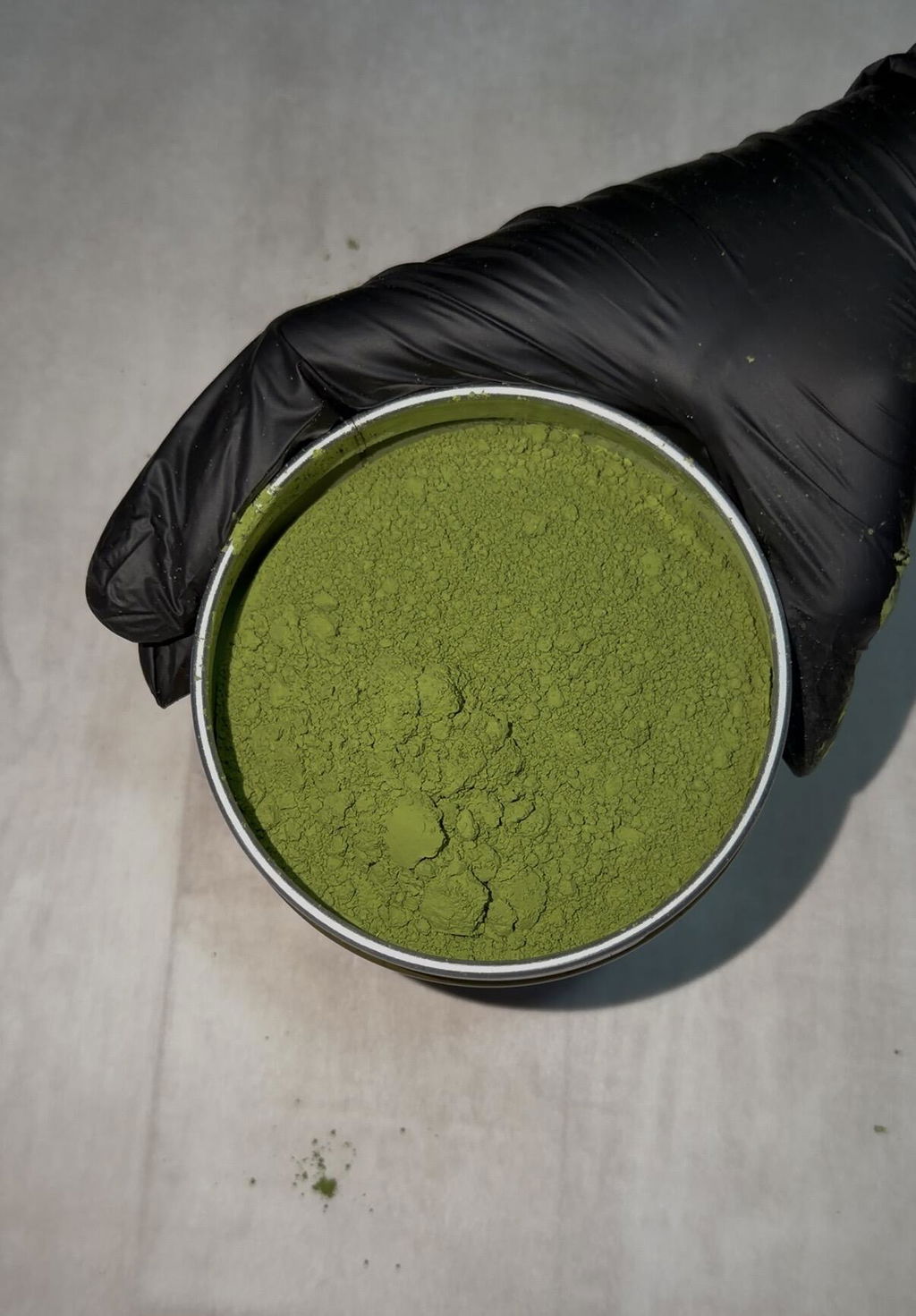
Fresh, high-grade matcha should be a vivid, saturated green — think of new spring foliage. Dull, yellowish, or brownish tones suggest oxidation or lower-quality leaf. When buying online, seek out clear, accurate photography and honest descriptions from sellers who understand what they are offering.
2. Check for a harvest or production date
One of the clearest signs of a trustworthy source is transparency about dates. A stated harvest season or milling date lets you judge how recently the matcha was made. Be wary of packaging that lists only a distant "best before" date with no indication of when the tea was actually produced.
3. Trust your nose
Once opened, fresh matcha releases a sweet, green, almost oceanic aroma. A weak, flat, or faintly stale smell is a signal that oxidation has advanced. Many people find that aroma is one of the most immediate and honest indicators of freshness.
4. Assess texture and taste
Fresh matcha is fine and silky, sifting easily and whisking into a smooth suspension. In the bowl, it should taste rounded and layered, with sweetness balancing any natural bitterness. Older matcha often tastes noticeably more astringent and one-dimensional, with the umami character diminished.
Storing Matcha to Preserve Freshness
Buying fresh is only half the equation — keeping it fresh is the other. A few simple habits go a long way:
- Keep it sealed and airtight. Return matcha to its original packaging or an airtight tin immediately after use, pressing out excess air where possible.
- Store cool and dark. A cupboard away from the stove, kettle, and sunlight is ideal. Heat and light both accelerate decline.
- Guard against moisture. Never let a wet scoop or damp spoon touch your matcha, as moisture invites clumping and faster deterioration. Keep it away from humid areas.
- Refrigerate with care. Refrigeration can extend shelf life for unopened matcha, but condensation is a real risk. If refrigerating, allow a sealed container to return to room temperature before opening to prevent moisture from settling on the powder.
Freshness as a Mark of Respect
Ultimately, treating matcha with an eye to freshness is a way of honouring the extraordinary craftsmanship behind it — the months of shading, the careful harvest, the slow stone milling that produces just a few dozen grams an hour. When you buy in sensible quantities, store thoughtfully, and drink within the peak window, you allow all that skill to reach your bowl intact.
At Wakokoro Tea, freshness sits at the heart of everything we source. If you would like to taste matcha as its makers intended — vivid, aromatic, and full of life — we warmly invite you to browse our carefully selected range and reach out with any questions about choosing the right matcha for your home or café.