
Does Matcha Expire? Understanding Shelf Life and Freshness
Wakokoro TeaShare
Few teas capture the imagination quite like matcha. That luminous jade-green powder, whisked into a frothy bowl of umami and gentle sweetness, represents centuries of Japanese craftsmanship distilled into a single cup. Yet matcha is also one of the most delicate teas in the world — and unlike a robust black tea or a well-aged pu-erh, it does not improve with time sitting on a shelf. So the question many tea lovers and cafe owners eventually ask is a practical one: does matcha expire, and how do you know when it's no longer worth drinking?
The short answer is that matcha does not "expire" in the way that perishable food spoils, but it absolutely does decline in quality. Understanding why this happens — and how to slow it down — will help you get the very best from every precious gram.
Why Matcha Is So Sensitive to Time
To appreciate why matcha fades, it helps to understand what makes it different from other green teas. Matcha is made from tencha (shade-grown leaves that are steamed, dried, and de-stemmed), which is then stone-ground into an ultra-fine powder. Because the entire leaf is consumed rather than steeped and discarded, matcha delivers an exceptional concentration of the compounds that give it flavor, aroma, and color.
That same fineness, however, is its vulnerability. When a leaf is ground into powder, an enormous amount of surface area is suddenly exposed to the elements. Oxygen, light, heat, and moisture all begin to interact with the powder immediately. The delicate chlorophyll that produces matcha's signature green, the amino acids responsible for its savory depth, and the aromatic compounds that lend freshness all begin a slow, steady degradation from the moment the tea is milled.
This is why premium producers grind matcha in small batches and package it carefully — and why the way you store it once the tin is opened matters just as much as how it was made.
What Actually Happens as Matcha Ages
Aging matcha doesn't become dangerous or unsafe to consume, assuming it has been kept dry. Instead, it gradually loses the very qualities that make it special. Here is what changes over time.
Color Dulls from Vibrant Green to Yellow-Brown
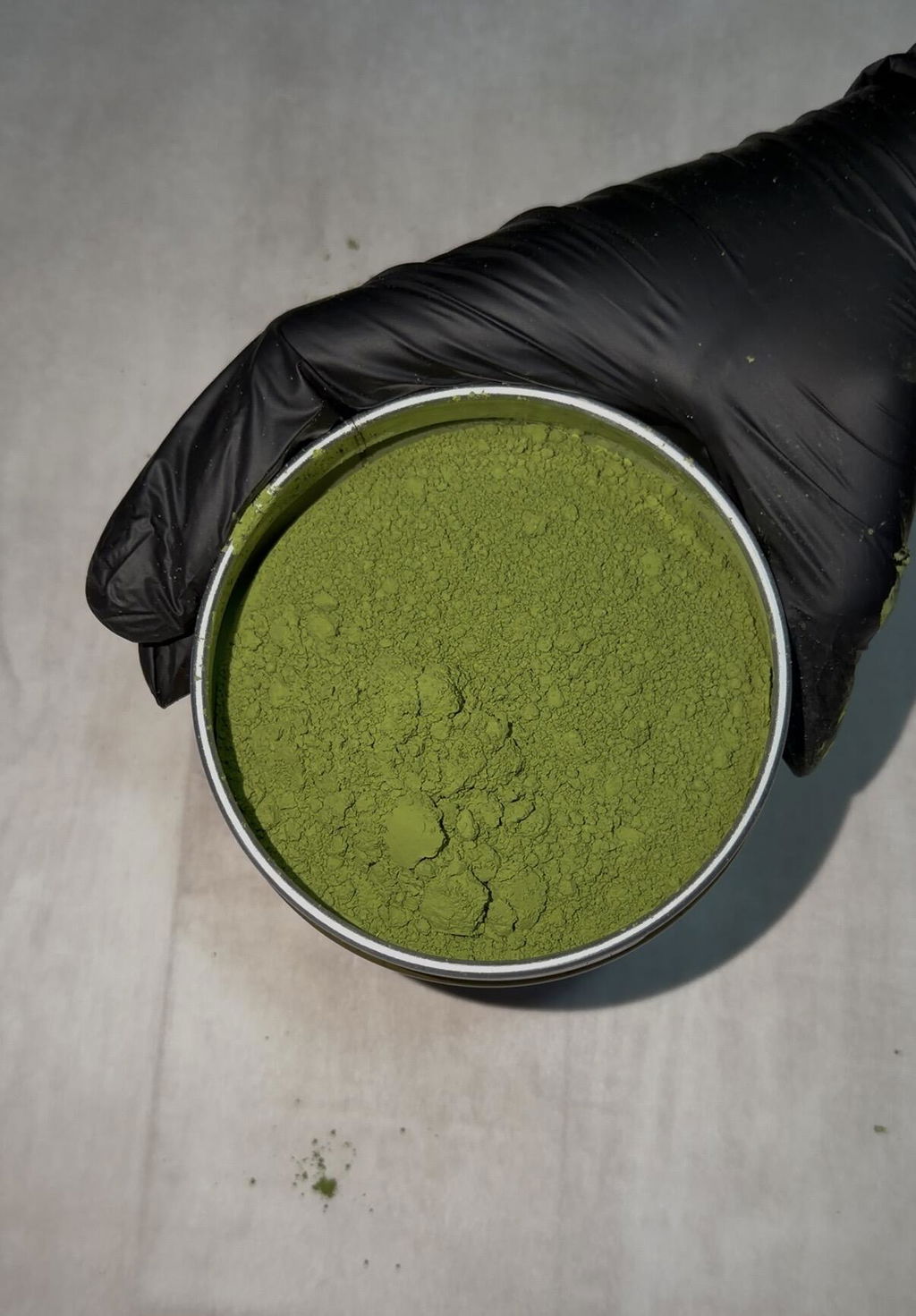
The most visible sign of aging is color. Fresh, high-grade matcha is a vivid, almost electric green thanks to the chlorophyll preserved through careful shading and processing. As oxidation sets in, that brilliance fades toward a muted olive, then a dull yellow-brown. Since color is one of the clearest indicators of quality, a lackluster hue often signals that flavor has faded too.
Aroma Grows Faint
Freshly opened matcha releases a sweet, grassy, almost marine fragrance — sometimes described as reminiscent of fresh nori or spring greenery. Over time this aroma weakens and can turn flat, hay-like, or faintly stale. A quick sniff is one of the easiest ways to gauge whether your matcha still has life in it.
Flavor Loses Its Umami and Sweetness
The prized balance of umami (savory depth) and natural sweetness comes largely from amino acids such as L-theanine, which is traditionally associated with the smooth, mellow character of shade-grown tea. As matcha ages, these delicate notes recede while bitterness and astringency become more prominent. What was once a rounded, satisfying bowl can become sharp and one-dimensional.
Texture and Whisking Change
Older matcha, particularly if it has absorbed any moisture, may clump more readily and become harder to whisk into a smooth, even froth. Fresh matcha typically suspends beautifully and produces a fine, creamy foam.
Does Matcha Have a Shelf Life?
Most matcha is sold with a best-by date printed on the packaging, usually somewhere between six months and a year from production. It's important to understand what this date means and what it doesn't.
- Unopened matcha stored in a cool, dark place will generally retain good quality until its best-by date, and often remains perfectly drinkable for a short while beyond it — though at gradually diminishing quality.
- Opened matcha is on a much faster clock. Once air reaches the powder, freshness declines noticeably. As a general guide, many people find that opened matcha is at its finest within three to four weeks, and still enjoyable for a couple of months if stored well.
These are guidelines rather than strict rules. A tin kept sealed in the refrigerator will outlast one left open on a sunny counter by a considerable margin.
How to Tell When Matcha Should Be Discarded
Because matcha is a dried powder, it rarely becomes unsafe in the way fresh food does. The real question is usually about quality, not safety. Still, there are moments when it's time to let a tin go. Consider replacing your matcha when you notice:
- A distinctly brown or yellow color that has lost all vibrancy.
- A stale, musty, or hay-like smell with none of the original freshness.
- A flat or unpleasantly bitter taste that no amount of technique can rescue.
- Any sign of moisture — hard clumps that won't break apart, or the faintest hint of mustiness — which can indicate the powder has been compromised. If you ever suspect mold or an off odor suggesting dampness, discard it without hesitation.
For culinary purposes — lattes, baking, or blending into smoothies — matcha that has faded past its ceremonial prime can still be perfectly pleasant, since added milk, sweeteners, and other ingredients mask subtle losses. Many cafe owners keep a fresher grade for whisked bowls and a value grade for milk-based drinks for exactly this reason.
How Proper Storage Extends Matcha's Life
The good news is that thoughtful storage can dramatically slow the aging process. The four enemies of matcha are air, light, heat, and moisture, so every good storage habit is really about limiting exposure to these.
Keep It Sealed and Airtight
Always close the container tightly after each use. Matcha is traditionally sold in resealable tins or foil pouches for this reason. Pressing out excess air before sealing a pouch helps limit oxidation.
Store Away from Light and Heat
Keep matcha in an opaque container, in a cupboard or drawer away from direct sunlight and heat sources such as ovens or stovetops. Light accelerates the breakdown of chlorophyll, hastening that unwelcome shift toward brown.
Refrigerate — With Care
Storing sealed matcha in the refrigerator can meaningfully extend its freshness by keeping it cool and dark. The key caution is condensation: when you remove chilled matcha, moisture in the surrounding air can condense on the cold powder. To avoid this, let a sealed container return to room temperature before opening it, and keep matcha well away from strong-smelling foods, as the powder readily absorbs surrounding odors.
Buy in Sensible Quantities
Perhaps the simplest strategy of all is to buy matcha in amounts you'll realistically use within a few weeks of opening. Freshness is a fleeting pleasure, and smaller, more frequent purchases often deliver a better experience than one large tin that lingers.
A Fresh Perspective on Freshness
Matcha rewards those who treat it with a little care. It may not spoil the way perishable foods do, but its beauty lies in ephemeral qualities — that brilliant green, the fragrant lift, the layered sweetness — all of which are best enjoyed while the powder is young. By understanding what changes as matcha ages and by storing it thoughtfully, you honor both the tea and the generations of farmers and artisans who crafted it.
If you're ready to taste matcha the way it was meant to be experienced — vivid, aromatic, and freshly milled — the team at Wakokoro Tea would be glad to help you find a grade suited to your bowl, your cafe, or your wholesale shelves. Reach out to us, and let's bring a little more of Japan's living tea tradition into your everyday cup.